 Advance directives for dementia
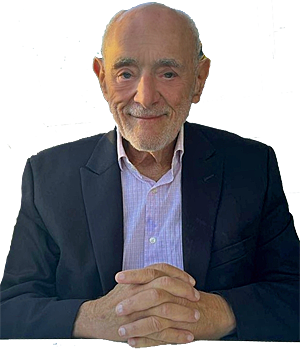
May 07, 2025 -- Today, my friend Stan Terman MD PhD psychiatrist and bioethicist is presenting to the Network for End-of-Life Care. In his work, he is refining the language and procedures surrounding Advance Directives. As these documents are commonly written today, there are few provisions for the subtleties demanded by dementias. In that context, families must often struggle with healthcare decision-making. Often, patients don't get what they would have chosen. Stan is fixing that. He calls his solution a Natural Dying Living Will and you can create your own on-line. Here are examples of issues that are often not well resolved by conventional Advance Directives:
Stan identifies fifty specific dementia-related conditions to enable sufferers to specify their wishes with regard to each. These include:
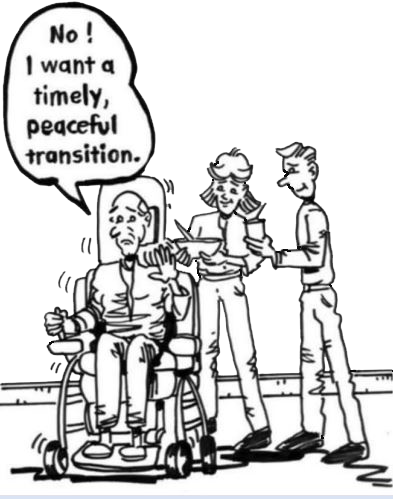
Using Stan's NOW Care Planning (for patients who are in an advanced stage of dementia and have no effective living will) for each of the fifty, the patient can choose one of:
This approach also addresses such subtleties as:
Here is Stan's Effective Advance Care Planning for Late-Stage (Advanced) Dementia presentation. This is important work and addresses many of the flaws in the way we die today. Check it out! |
Dan Keller's Nursing, Health Policy & Healthcare Technology Blog
Nursing Informatics · Clinical Perspectives · Healthcare Systems

"The United States alone [among wealthy countries] treats health care as a commodity to be distributed according to the ability to pay rather than a social service to be distributed according to medical need." — JAMA (2003), 290, 798