 The Nursing Process, Really
In her ground-breaking 2006 paper, Thinking Like a Nurse: A Research-Based Model of Clinical Judgment in Nursing, Chris Tanner (of whom I've written before) writes in the Journal of Nursing Education,
[This is] one type of systematic problem solving [but] ...it fails to adequately describe the processes of nursing judgment... this model fails to account for the complexity of clinical judgment and the many factors that influence it, complete reliance on this single model to guide instruction may do a significant disservice to nursing students. 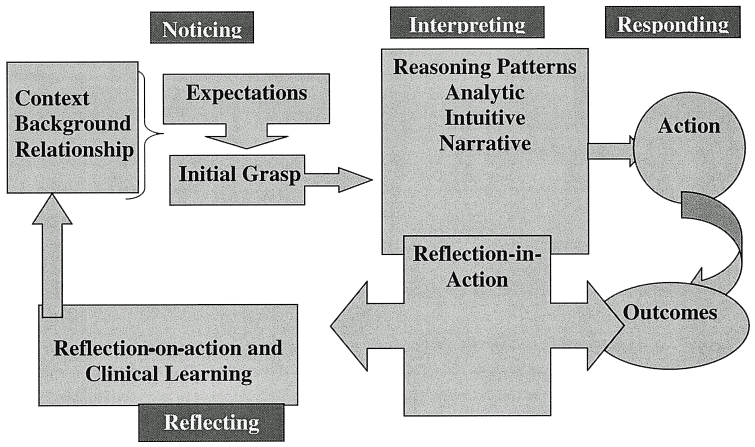
The diagram at left depicts Tanner's more realistic model:
Nurses must "think like a nurse." What does that mean? From her extensive literature review (120 articles) with keywords "clinical judgment" and "clinical decision making," and of course her own experience at the bedside, Tanner concludes that in reality, nurses' judments and decisions are reached through processes that are considerably more nuanced than the tired assess/plan/implement/evaluate model:
Paraphrasing all this -- dumbing it way down -- I would say her more accurate description of the nursing process is:
After all, what is the goal of nursing education? Good nurses! And good nursing requires good thinking. To teach that, we must first understand it. Tanner is getting us there. |
Dan Keller's Nursing, Health Policy & Healthcare Technology Blog
Nursing Informatics · Clinical Perspectives · Healthcare Systems

"The United States alone [among wealthy countries] treats health care as a commodity to be distributed according to the ability to pay rather than a social service to be distributed according to medical need." — JAMA (2003), 290, 798
 March 9, 2025 --
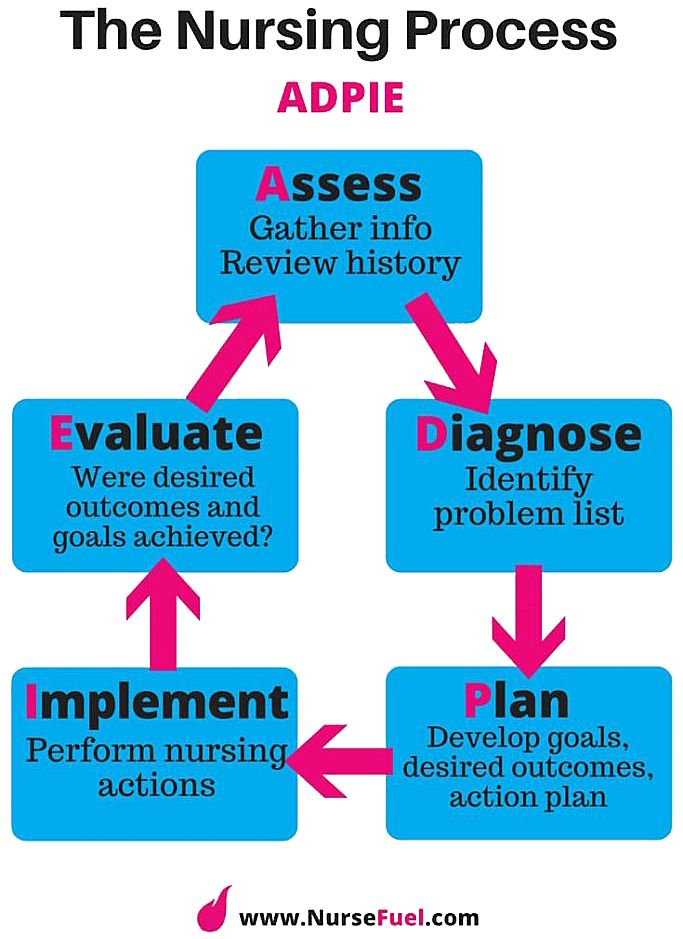
Every nursing student has drummed into them the so-called nursing process.
This is this cycle: assess/diagnose, plan, implement, evaluate (did it work?),
repeat as needed. Is this an effective strategy?
March 9, 2025 --
Every nursing student has drummed into them the so-called nursing process.
This is this cycle: assess/diagnose, plan, implement, evaluate (did it work?),
repeat as needed. Is this an effective strategy?