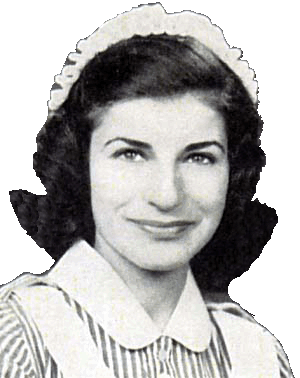
It was 1944 and America was at war. The experienced staff nurses
were abroad, serving in the U.S. Nurse Corps, providing medical care
for the troops. Judith -- my mother -- had just graduated from high
school and, newly-admitted to nursing school, was pressed into
service to fill the need here at home. She writes:
In 1944, we were student nurses at Bellevue, a 3,000-bed hospital
in New York City, on First Avenue. Described as a city within a
city, its many buildings stretched from East 26th St. to East 30th
along the East River. It had a prison, a mortuary, and even its
own State Supreme Court.
Bellevue could not refuse anyone. If you were a patient in a
private hospital and couldn't pay your bill, you were shipped off
to Bellevue, no matter how sick you were. That was sometimes
referred to as your "last ride".
It was a catchall for paupers, psychotics and criminals. Bowery
bums loved to winter at Bellevue, finding some way to get admitted
and, once admitted, would figure out how to make their
thermometers spike a fever, assuring them of a warm bed for
another night.
Bellevue was one of the world's great teaching centers. It was a
coveted learning ground for young, new M.D. interns (the third D!)
and for student nurses, too. With the seasoned nurses gone, the
student nurses filled in, taking classes during the day and
covering on the wards at night.
It was hard work. Students were assigned to medical and surgical
wards, immense rooms with 60 to 80 patients, none of whom we had
seen before. On a good night we had a nurse's aide, but often we
were alone with all these very, very sick patients to care for.
At Bellevue, we treated the worst cases of the worst diseases.
Nurses who had trained at Bellevue proudly wore their organdy caps
with the ruffle all around and were respected wherever they
worked.