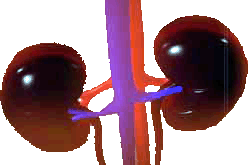
Mind = Brain?
February 5, 2011 -- Occidental cultures generally hold that the human identity resides somewhere behind the eyes -- in the brain. For example, the Mind-Brain Identity Theory says that, "...mental states are identical with brain states." Not so fast, say I. Damage to the brain is often associated with damaged thought processes. For example, Oliver Sacks "...throughout his career as a physician and neurologist, ...studied patients who exhibited 'a strange mixture of [mental] strengths and weaknesses.' His patients had autism, William's Syndrome, Tourette's Syndrome, amnesia and other conditions." When the brain malfunctions, thoughts malfunction. However, this does not preclude the involvement of other bodily organs in personal identity and thought. Our Western notion that identity, thoughts, and feelings reside exclusively within our skulls is at best dubious, more likely erroneous. Ask anyone who has undergone an amputation. As nurses we are taught that phantom pain is real pain but more than that the amputee will tell you that part of themselves -- not merely an extremity -- is gone.
Nearly every Latin love song refers to the coraçon -- the heart -- as the locus of emotion. Eastern religion and medicine recognize a dozen or so chakras -- pathways for flows of energies in the body -- located along the spine, in the ovaries or prostate, the throat, and so on. In our own western culture we speak of visceral emotions and gut feelings. Our skin crawls; we know things in our bones; and so on. The point is that all these organs participate in the formation of our consciousness and our emotional state. My hypothesis here is that the kidneys are especially central to emotional state. In nursing school, we learn that they regulate fluid and electrolyte balances. These in turn drive cognition and mood. When the kidneys do not sufficiently remove ammonia from the bloodstream, we become demented. When they imperfectly regulate our bodies' acid-base balance, we become acidotic or alkalotic and thus agitated or lethargic. We think with our brains and with our kidneys. The distinction between mind and body is a paradigm of our western culture, at times useful but at other times driving us to discussions of placebos (with which the mind bluffs the body), etc., that emerge as corollaries. We believe this dichotomy deeply. But what if it weren't entirely true? Another model might serve us better. What might it be called? The Thinking Body? Placebonics? Kidneys 'r us? We do think with our brains... Also our hearts, guts, skin, bones, kidneys -- the mind is the whole body! What a concept! |
|
Dan Keller's Nursing, Health Policy & Healthcare Technology Blog
Nursing Informatics · Clinical Perspectives · Healthcare Systems

"The United States alone [among wealthy countries] treats health care as a commodity to be distributed according to the ability to pay rather than a social service to be distributed according to medical need." — JAMA (2003), 290, 798
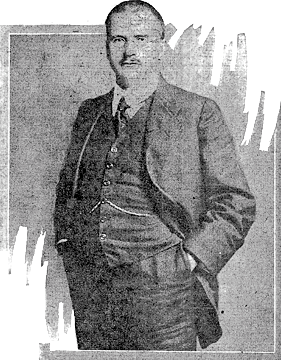 Another way in which our sense of self encompasses more than the contents
of our heads becomes clear with the deaths of family and friends. In a real and profound
way, with each such passing we lose part of ourselves. We exist not just in the context of our
bodies but also in terms of the people who know (or knew) us, our accomplishments, personalities,
and personal histories.
As our isolation increases, our place in the world is diminished. There are vocabularies for
discussing this, for example Carl Jung's
Another way in which our sense of self encompasses more than the contents
of our heads becomes clear with the deaths of family and friends. In a real and profound
way, with each such passing we lose part of ourselves. We exist not just in the context of our
bodies but also in terms of the people who know (or knew) us, our accomplishments, personalities,
and personal histories.
As our isolation increases, our place in the world is diminished. There are vocabularies for
discussing this, for example Carl Jung's