Being Present
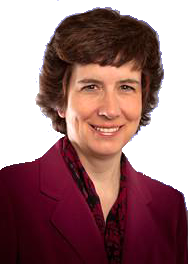
September 12, 2012 -- When she was my professor at USF in 2004, Dr. DorAnne Donesky was one of the best, a clear thinker, effective communicator, and inspiring teacher. In her pathophysiology class I learned how the kidneys and the lungs work together for an astonishingly complex metabolic and chemical balance -- they do much more than pee and breathe -- one of many breakthroughs in my understanding of what goes on in my patients' bodies. Today, Dr. Donesky articulated to me what is perhaps the central value proposition of NurseMind (I couldn't have said it better myself): it supports nurses in maintaining or even regaining their presence. The unwary nurse can be caught up in the swirl of myriad technical tasks she must do in the course of her duties. She could devolve into a mere technician, getting the details handled but losing sight of the patient. For the aviator, the pre-flight checklist is not a how-to-fly manual but it does make sure nothing important is overlooked, and he wouldn't take off without it. Nurses need checklists no less. As the checklist lets the flyer concentrate on the skilled part of flying by tracking those details -- nothing forgotten, everything on time -- NurseMind frees up the nurse's brain (there's that word again) to concentrate on the patient, to be truly present. Presence is to nurses what the stethoscope is to doctors: a tool without which they cannot be effective in their work. Indeed, it is perhaps more central than the stethoscope, which is used to evaluate only one aspect of a patient's health status; when she is present with her patient, the nurse's senses are freed to pay attention to everything about the patient. She attends to subtleties, and her clinical judgement is fully available to see everything that is going on -- responses to therapies, psychosocial needs, life condition. The task at hand may be cleaning a butt, but when she's present, the nurse is looking for much more: mobility, skin breakdown, level of consciousness, body systems status, disease processes, and so on. When the nurse is distracted by work that has grown so technical, or when the "lower-level" tasks such as hygiene are given to lower-skilled workers, opportunities for this all-important presence are diminished. Though unions are not effective in communicating the importance of this tool in nursing work and the gravity of its denial, it is a big part of why nurses strike: they are frustrated by obstacles to being present for patients. Unlike the unions, Dr. Donesky is articulate on the topic of nursing presence. As a teacher, she strives to instill it in her students and fellow nurses. It is, she says, what above all distinguishes nursing work. The surgeon performs the operation, the therapist conducts life-restoring procedures, the attending is heroic in delivering emergency care. But it is the nurse who sees the patient in between those brief doses of attention, and who is with them on the night shift and able -- when she can fulfill her presence -- to see the big picture. She recounts the story of three bricklayers: They labor in the hot sun, placing and cementing bricks with skill and sweat. Of his work, the first one says, "It's a job. Keeps me out of trouble!" The second one says, "It's more than a job, it feeds my family and secures my place in my community." But the third one says, "Look at the fabulous cathedral that's rising on this spot!" Not losing sight of the central purpose of the work is this all-important notion of presence. That's the nurse Dr. Donesky inspires me to be. |
|
Dan Keller's Nursing, Health Policy & Healthcare Technology Blog
Nursing Informatics · Clinical Perspectives · Healthcare Systems

"The United States alone [among wealthy countries] treats health care as a commodity to be distributed according to the ability to pay rather than a social service to be distributed according to medical need." — JAMA (2003), 290, 798